
A Crack in Creation: Gene Editing and the Unthinkable Power to Control Evolution
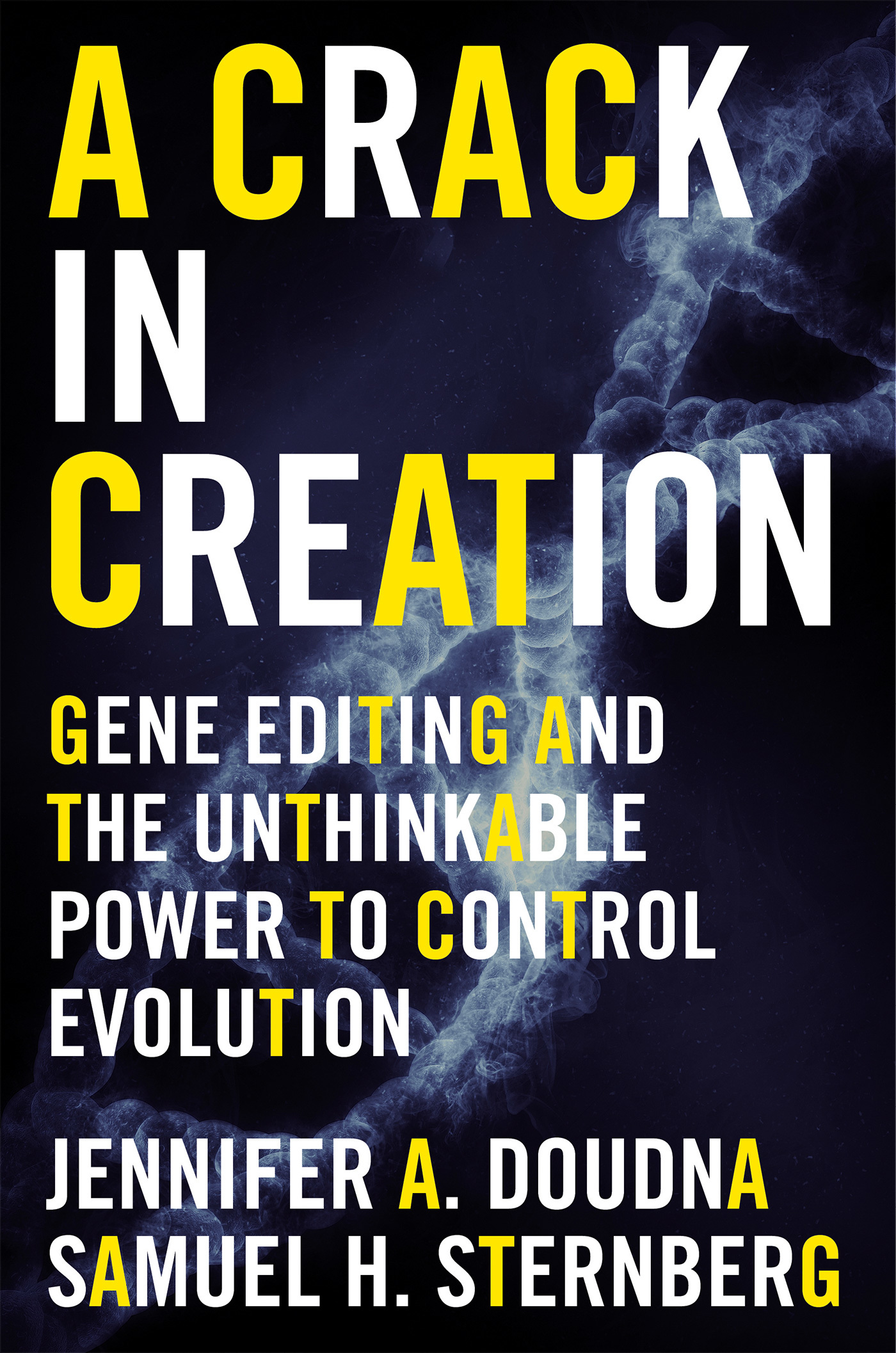
Title: A Crack in Creation: Gene Editing and the Unthinkable Power to Control Evolution
Authors: Jennifer A. Doudna and Samuel H. Sternberg
Publisher: Houghton Mifflin Harcourt / Mariner Books
Publication Date: June 13, 2017
Format Read: Hardcover
Page Count: 281 pages
ISBN: 9780544716940 (ISBN-10: 0544716949)
Genre: Science / Nonfiction / Biology / Genetics / Health / Technology
Target Audience: Academic researchers, policymakers, bioethicists, and scientifically curious general readers.
Rating: ★★★★½ (4.5 out of 5 stars)
Disclaimer: I was provided a complimentary copy of this book from the publisher for review purposes. This arrangement has in no way affected the content, objectivity, or critical stance of this review.
Introduction: The Tsunami of the Anthropocene
Between managing a large directorate of government personnel, navigating the labyrinthine complexities of public health policy, raising a family, and tending to an admittedly overgrown indoor jungle of houseplants and three highly demanding cats, my reading time is fiercely protected. Books that make it to my nightstand must offer more than mere exposition; they must challenge my understanding of the world. A Crack in Creation by Jennifer A. Doudna and Samuel H. Sternberg does precisely that.
As a middle-aged woman whose career spans science, health policy, and intelligence community tradecraft, I evaluate technological advancements through a dual lens: their capacity to heal and their potential to disrupt global security. In A Crack in Creation, Doudna—co-inventor of the CRISPR-Cas9 gene-editing technology—and her former student Sternberg offer a profound exploration of a tool that has fundamentally altered the trajectory of biological science.
Thesis of the Review: A Crack in Creation is a foundational text that bridges the perilous gap between molecular biology and global public policy. While it occasionally leans toward scientific optimism, it serves as an indispensable primer on the most significant scientific breakthrough of the 21st century. It is a rare blend of scientific immediacy and narrative craft that makes the microscopic feel globally urgent.
Summary of the Work
The book traces the discovery, development, and application of CRISPR-Cas9, a bacterial immune mechanism repurposed into a highly precise, programmable gene-editing tool. Divided into two main sections—“The Tool” and “The Task”—the authors chronicle the transition of CRISPR from a niche area of microbiological research into a global phenomenon.
Doudna and Sternberg detail how humanity has crossed a biological Rubicon. For billions of years, life was governed by Darwinian evolution—random mutations tested by environmental pressures. With CRISPR, we have ushered in an era of directed, human-controlled evolution. The authors outline current and future applications, from modifying crops and eradicating mosquito-borne illnesses like Zika and malaria, to treating genetic defects such as cystic fibrosis and sickle cell disease. More crucially, the book confronts the ethical abyss of germline editing—altering human embryos in ways that will be inherited by future generations.
Analysis and Evaluation
Themes and Voices
The predominant theme of the work is the tension between humanity’s technological capability and our moral preparedness. Doudna’s voice is an elegant juxtaposition of scientific awe and existential dread. She places herself not just as a researcher, but as a reluctant custodian of a world-altering power.
Style, Craft, and Narrative Architecture
Elegant and economical, it proves that restraint can illuminate complexity rather than obscure it. The authors utilize vivid, accessible metaphors to decode dense biochemical processes. The prologue is particularly striking, opening with Doudna’s recurring dream of a tsunami on the shores of Hilo Bay, Hawaii.
“I blink awake in my Berkeley, California, bedroom, thousands of miles away from my childhood home… The beach is a mirage, but the waves, and the tangle of emotions they inspire—fear, hope, and awe—are only too real.” (Prologue)
This dream serves as a brilliant narrative anchor, symbolizing the unstoppable wave of biotechnology she helped trigger. The pacing in the first half reads like a scientific thriller, while the second half transitions into a rigorous policy and ethics brief.
Argument, Evidence, and Policy Implications
From an intelligence and health policy perspective, the authors’ arguments are logically sound and heavily documented. They systematically evaluate the agricultural, veterinary, and medical applications of CRISPR. Doudna illustrates the technology’s ease of use—a factor that deeply concerns the intelligence community regarding biosecurity.
“Practically overnight, we have found ourselves on the cusp of a new age in genetic engineering and biological mastery—a revolutionary era in which the possibilities are limited only by our collective imagination.” (Prologue)
Strengths: The book excels in its accessibility. Doudna and Sternberg demystify the 3.2 billion letters of the human genome, making the science digestible without diluting its gravity. It is a work that not only tells a story but reframes how we talk about its themes.
Weaknesses and Limitations: If the book falters, it is in its somewhat constrained exploration of state-sponsored misuse or asymmetrical bio-warfare. With respect to intelligence tradecraft, I found the bio-threat assessment slightly underdeveloped. The authors focus heavily on rogue scientists and clinical ethics, occasionally glossing over the geopolitical ramifications of a genetic arms race between competing nations.
Contextual Analysis and Comparisons
Published in 2017, the book occupies a fascinating historical moment: post-discovery, but pre-He Jiankui (the Chinese scientist who shockingly announced the creation of the first CRISPR-edited babies in 2018). Reading this book retroactively gives Doudna’s ethical warnings a hauntingly prophetic resonance.
Comparative Lens: A Crack in Creation sits comfortably alongside Siddhartha Mukherjee’s The Gene: An Intimate History and Walter Isaacson’s later biography of Doudna, The Code Breaker. While Mukherjee provides a sweeping historical context and Isaacson focuses on the personalities behind the science, Doudna and Sternberg offer the unvarnished, primary-source perspective of the innovators themselves.
Suitability and Audience Guidance
- Reading Level & Accessibility: Highly accessible for the educated layperson. It requires no advanced degree in molecular biology, though readers with a background in science will appreciate the nuanced detailing of Cas9 mechanisms.
- Content Warnings: None, aside from discussions of severe genetic diseases and animal testing (e.g., “Schwarzenegger-like supermuscular physiques” in beagles), which may mildly distress sensitive readers.
- Best-fit Audience: Policymakers, medical professionals, bioethics students, and readers of popular science. The book pairs accessibility with ambition, inviting broader readership without compromising depth.
Practical Considerations
The physical layout of the hardcover edition is highly user-friendly, featuring comprehensive notes, an index, and illustrative diagrams (drawn by Jeffery Mathison) that are vital for visualizing DNA cleavage. It is widely available in print, e-book, and audiobook formats. At 281 pages, it is a brisk, engaging read that respects the reader’s time.
Conclusion and Verdict
A Crack in Creation is an essential document of our modern Anthropocene. It forces us to confront the reality that we are no longer merely subjects of nature; we are its engineers. Doudna and Sternberg have delivered a drama of language and memory that lingers long after the last page, challenging us to wield our newfound power with unprecedented wisdom.
Final Recommendation: Highly recommended for professionals in healthcare, government, and policy, as well as any citizen concerned with the future of human evolution. It offers a doorway to a larger conversation about bioethics, inviting readers to step through and take a seat at the table.
Supplementary Elements: Reader Companions
What to Read Next:
- The Code Breaker: Jennifer Doudna, Gene Editing, and the Future of the Human Race by Walter Isaacson – For a deeper dive into the biographical and competitive landscape of the CRISPR patent wars.
- The Gene: An Intimate History by Siddhartha Mukherjee – To contextualize CRISPR within the broader history of genetics.
- Biodefense in the Age of Synthetic Biology (National Academies of Sciences, Engineering, and Medicine) – For my colleagues in the intelligence and defense sectors looking for the hard policy implications of gene editing.
Discussion Prompts for the Classroom or Boardroom:
- How should international regulatory bodies manage a technology that is cheap, ubiquitous, and relatively easy to use in a standard laboratory?
- Does the ability to “humanize” pig organs for transplantation cross an ethical boundary, or is it a moral imperative to solve the organ donor shortage?
- Doudna expresses deep fear regarding germline editing. Do you believe a global moratorium on human embryo editing is practically enforceable in today’s multipolar geopolitical landscape?
Rating: ★★★★ 4.5 / 5
- Prairie Fox 🦊📖

.HEIC)

.jpg)
Comments
Post a Comment