
A Game of Retribution: A Study in Power Dynamics, Autonomy, and Divine Consequence (Hades Saga #2, Hades x Persephone Reading Order #4)
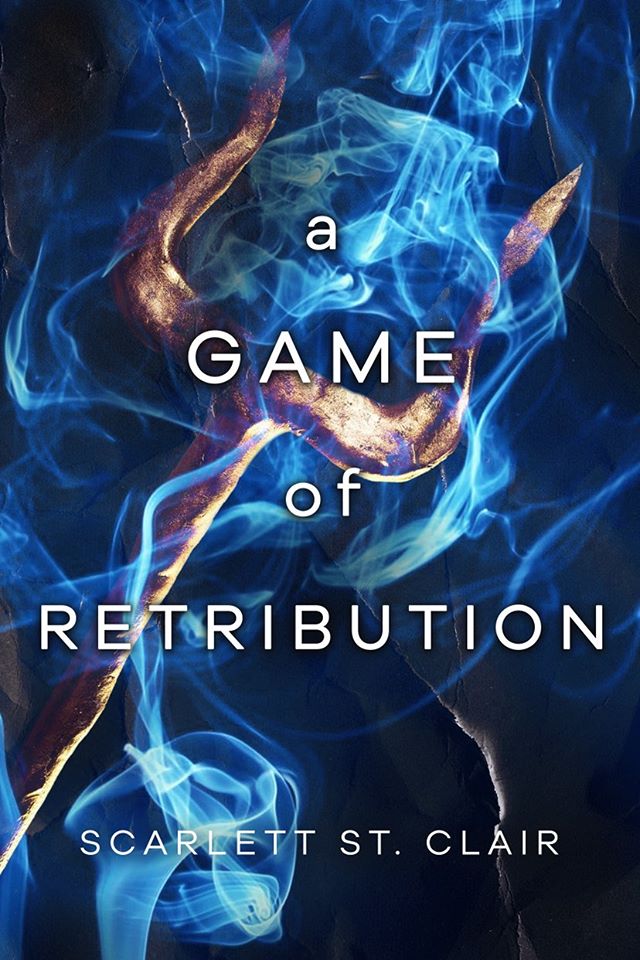
A Game of Retribution: A Study in Power Dynamics, Autonomy, and Divine Consequence
Star Rating: ★★★★☆ (4 out of 5 stars)
Disclaimer: I was provided a complimentary copy of this book from the publisher for review purposes. This has not affected the content, objectivity, or analytical stance of this review.
Publication and Context
Title: A Game of Retribution (Hades Saga #2, Hades x Persephone Reading Order #4)
Author: Scarlett St. Clair
Publisher: Bloom Books
Publication Date: First published May 31, 2022 (Current Edition: May 31, 2024)
Page Count: 427 pages, Kindle Edition
ASIN: B09GL14D21
Genre: Fantasy, Romance, Mythology, Romantasy
Target Audience: Adult readers of fantasy romance and modern mythological retellings.
Within the current literary zeitgeist, the “romantasy” genre has experienced exponential growth, often serving as a cultural backdrop for exploring modern anxieties through mythological lenses. Scarlett St. Clair has established herself as a formidable architect within this space. A Game of Retribution sits in direct conversation with her previous work, acting as a parallel narrative to the Persephone-led novels, but shifting the paradigm to focus exclusively on Hades.
Purpose and Thesis of the Review
This review posits that A Game of Retribution transcends the boundaries of standard romance by operating as a compelling examination of executive isolation, crisis management, and the systemic vulnerabilities inherent in absolute power. By applying an analytical lens to the text, we can evaluate the novel not merely as a love story, but as a study of how leaders navigate tactical disruptions—in this case, Hera’s attempted coup—while attempting to cultivate a sustainable, grounded existence amidst relentless external pressures.
Summary of the Work
A Game of Retribution thrusts Hades, God of the Dead, into an unwinnable political matrix. Known for his unwavering adherence to systemic rules, Hades declines to assist Hera in her strategic maneuver to overthrow Zeus. Consequently, Hera leverages her position to sentence Hades to a series of arduous, near-impossible labors. As he is pulled away from his domain to execute these tasks, he is simultaneously forced to manage the psychological fallout experienced by his partner, Persephone, whose recent personal tragedy leaves her questioning her capacity to rule.
St. Clair’s goal is to deconstruct the mythos of the infallible god, revealing the administrative and emotional toll of leadership. Please note: This summary assumes a basic familiarity with the preceding novel, A Game of Fate, but refrains from detailing the specific outcomes of Hades’s labors to avoid spoilers.
Analysis and Evaluation
Themes and Ideas
The novel deeply engages with themes of retribution, institutional stability, and emotional intelligence. Hades is presented not just as a deity, but as an executive tasked with maintaining a sprawling infrastructure (the Underworld) while mitigating existential threats. The narrative asks a profound question: How does one maintain operational continuity when the governing system itself (Olympus) is corrupted by infighting?
Characters and Voices
Hades’s character development is the novel’s strongest asset. St. Clair strips away the veneer of the untouchable god, presenting a leader who relies heavily on intelligence gathering and strategic foresight. For instance, his early surveillance of the oracle Acacius demonstrates a meticulous approach to threat assessment. Persephone, conversely, provides the emotional anchor. Her journey through trauma and self-doubt is rendered with striking realism. Characters who feel both vividly present and inseparable from the book’s larger questions drive the narrative forward, forcing Hades to balance his public obligations with his private devotions.
Style and Craft
St. Clair’s prose balances accessible modernity with mythic weight. The integration of Homeric epics—such as the opening epigraph, “His descent was like nightfall” (Homer, The Iliad)—grounds the modern setting in classical tradition. Her writing is elegant and economical, proving that restraint can illuminate complexity rather than obscure it. The dialogue is sharp, particularly in moments of conflict. When the mortal media magnate Kal Stavros attempts to leverage Hades, the god’s response is swift and calculated: “The fact that you believe you could possibly benefit me, Kal, illustrates a significant amount of arrogance and ignorance” (St. Clair, Chapter I). This exchange is a masterclass in establishing power differentials through diction.
Setting and World-Building
New Greece is a fascinating construct, blending ancient divine politics with modern societal structures (media conglomerates, racetracks, and VIP galas). This world-building feels believable precisely because it mirrors our own complex societal ecosystems. Just as a thriving conservatory requires meticulous environmental control, or earning the trust of a skittish rescue animal demands profound patience, Hades’s domain requires constant, intentional cultivation against the harsh climate of Olympian politics.
Strengths and Limitations
The book’s primary strength lies in its psychological depth. It is a bold, empathetic perspective that challenges conventional expectations without losing heart. The pacing is relentless, mimicking the high-stakes environment in which the protagonist operates. However, a minor limitation arises in the occasional over-reliance on miscommunication tropes common to the genre, which can temporarily stall the otherwise tight narrative architecture.
Evidence and Support
Through close reading, it becomes evident that St. Clair utilizes environmental imagery to reflect internal states. In Chapter I, the tension at the Hellene Racetrack serves as a microcosm for the larger divine conflict. Hades’s internal monologue regarding his “addiction” to Persephone reveals a vulnerability that contrasts sharply with his outward stoicism. His observation of the mortal Kal Stavros—a practitioner of dark magic with “two strikes against him for misuse”—highlights Hades’s inherent reliance on surveillance and regulatory frameworks to maintain order (St. Clair, Chapter I). This is rich, precise prose that rewards patient attention and fresh interpretation.
Contextual Analysis
In a post-pandemic era where readers are collectively re-evaluating the boundaries between professional duty and personal well-being, A Game of Retribution feels highly relevant. It reflects a societal craving for leaders who possess both tactical brilliance and emotional empathy. The book pairs accessibility with ambition, inviting broader readership without compromising depth.
Comparisons and Alternatives
When compared to Madeline Miller’s Circe or Katee Robert’s Neon Gods, St. Clair’s work carves out a unique middle ground. It lacks the strictly literary, lyrical slow-burn of Miller, opting instead for a faster, more cinematic pacing akin to Robert, yet it retains a deeper focus on the bureaucratic and systemic realities of being a deity.
Suitability and Audience Guidance
Content Warnings: As explicitly noted in the text’s front matter, this book contains scenes that reference suicide and sexual violence. (Resources such as the National Suicide Prevention Lifeline and RAINN are thoughtfully provided by the publisher).
Target Audience: Ideal for adults navigating high-pressure lives who seek an immersive, romantic escape that does not insult their intellect. It is best suited for those who appreciate political maneuvering mixed with deep, character-driven romance.
Practical Considerations
- Availability: Available in Print, Kindle Edition (E-book), and Audiobook.
- Pacing: Fast-paced, driven by the structure of the sequential labors.
- Accessibility: The inclusion of front-matter content warnings and a clear table of contents enhances the reader’s ability to navigate the text safely and efficiently.
Conclusion and Verdict
A Game of Retribution is a drama of language and memory that lingers long after the last page. Scarlett St. Clair successfully utilizes the framework of romantasy to interrogate the burdens of authority, the necessity of emotional resilience, and the quiet tradecraft required to protect what one loves. For readers who spend their days managing personnel, balancing complex logistical ecosystems, and navigating institutional bureaucracy, this novel provides a deeply satisfying retreat.
Final Recommendation: Highly recommended for established fans of the Hades Saga and scholars of modern mythological adaptations alike. This is a book that invites rereading, revealing new layers with each visit.
Supplementary Elements: Reading Companions
Discussion Questions:
- How does Hades’s approach to crisis mitigation differ from Zeus’s or Hera’s? What does this suggest about the author’s view of effective leadership?
- Analyze the role of mortal media (e.g., Kal Stavros) in New Greece. How does it act as both a tool and a weapon against divine authority?
- In what ways does Persephone’s trauma inform her decision-making, and how does Hades adapt his “executive” style to support her?
What to Read Next:
- Lore Olympus (Volume 1) by Rachel Smythe – For a visual, emotionally resonant alternative to the Hades and Persephone myth.
- A Court of Silver Flames by Sarah J. Maas – For readers seeking another deep dive into a character’s psychological trauma amidst high-stakes political fantasy.
- Kushiel’s Dart by Jacqueline Carey – For those who appreciated the intricate blend of political tradecraft, intelligence gathering, and romance.
Rating: ★★★★ 4.0 / 5
- Prairie Fox 🦊📖

.HEIC)

.jpg)
Comments
Post a Comment