
Food Rules: An Eater's Manual
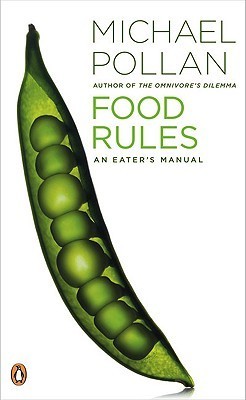
Food Rules: An Eater's Manual
By Michael Pollan
Genre: Nonfiction / Health / Nutrition / Food Writing
Publication Year: 2008
My Rating: ★★★★½ (4.5/5)
Spoiler Preference: Spoiler-Free
The Wisdom of Simplicity in an Age of Nutritional Noise
Few areas of modern life are as overcrowded with advice as nutrition.
On any given day, we are told to avoid carbohydrates, embrace carbohydrates, fear fat, celebrate fat, count calories, ignore calories, eat like our ancestors, eat like Mediterranean villagers, eat for our blood type, eat for longevity, or eat according to the latest social media trend. Amid this endless stream of contradictory guidance, Michael Pollan's Food Rules offers something that feels almost radical: simplicity.
This is not a book of breakthrough scientific discoveries. It is not a comprehensive nutrition textbook. It is not a detailed dietary program complete with meal plans and recipes. Instead, Food Rules is a compact collection of practical principles designed to help ordinary people navigate an increasingly confusing food environment.
Reading it felt less like attending a nutrition lecture and more like sitting across the kitchen table from a particularly thoughtful friend who has spent years sorting through the evidence and wants to save you some time.
The result is a book that is brief, accessible, and surprisingly profound in its implications.
Distilling a Complex Subject
Food Rules emerged as a kind of companion volume to Pollan's larger and more ambitious work, The Omnivore's Dilemma. Whereas that book explored the complex systems behind modern food production, Food Rules addresses a narrower question: How should we actually eat?
Pollan organizes the book around dozens of short guidelines, many of them memorable enough to stick in the reader's mind long after the final page. His most famous advice is remarkably straightforward: "Eat food. Not too much. Mostly plants."
Everything that follows expands upon that core idea.
The rules draw upon traditional food cultures, common sense observations, nutritional science, and historical eating patterns. Pollan argues that modern societies often become overly focused on nutrients rather than food itself. By reducing eating to measurements of fat, carbohydrates, cholesterol, protein, or vitamins, we risk losing sight of broader dietary patterns that have sustained human populations for generations.
His central thesis is that healthy eating is often less complicated than modern food marketing and diet culture would have us believe.
While this argument may initially sound simplistic, Pollan develops it with considerable skill. He challenges readers to think critically about how food is produced, marketed, and consumed while offering practical tools for making better choices.
A Public Health Perspective: Why Environment Matters More Than Willpower
From a public health standpoint, one of the most appealing aspects of Food Rules is that it implicitly recognizes the limits of purely individual-centered health advice.
Much nutrition messaging focuses on personal responsibility. Individuals are told to make better choices, exercise discipline, and develop healthier habits. While those recommendations have value, they often overlook a critical reality: choices occur within environments.
Pollan repeatedly directs attention toward the food environment itself. Many of his rules encourage readers to avoid highly processed products, minimize exposure to aggressive food marketing, and reconnect with traditional eating patterns. In doing so, he highlights how modern food systems shape behavior.
As someone with a public health background, I appreciate that emphasis.
Population health improves not only when individuals change but when systems make healthier choices easier. Pollan's observations often point readers toward that broader truth without burdening them with policy jargon or academic terminology.
The book is also refreshingly focused on prevention. Rather than treating nutrition primarily as a tool for weight loss or disease management, Pollan frames eating as a long-term investment in health and well-being. That perspective aligns closely with public health principles, which prioritize reducing risks before they become serious problems.
However, one limitation becomes evident when considering health equity. Many of Pollan's recommendations assume access to fresh produce, time for meal preparation, safe grocery options, and sufficient financial resources to prioritize food quality. While his advice is generally sound, implementing it can be more challenging for individuals facing economic or geographic constraints.
This does not invalidate the guidance. It simply reminds us that nutrition is as much a social issue as a personal one.
Looking Through an Analytic Lens
One of Pollan's strengths as a writer is his willingness to challenge prevailing assumptions.
From an analytical perspective, Food Rules succeeds largely because it strips away complexity and asks readers to reconsider beliefs that have become normalized. Why do products with long ingredient lists dominate grocery stores? Why do foods require health claims in the first place? Why do traditional food cultures often produce healthier outcomes despite lacking modern nutritional science?
These questions encourage skepticism in the best sense of the word.
At the same time, the book should not be mistaken for a comprehensive review of nutritional evidence. Pollan intentionally prioritizes broad principles over detailed scientific discussions. Readers seeking extensive citations, competing interpretations of dietary research, or detailed analyses of nutritional controversies may find the treatment too abbreviated.
Yet that simplicity appears deliberate.
Pollan's goal is not to resolve every scientific debate. Rather, he seeks to identify durable patterns that remain useful even as specific nutritional recommendations evolve.
As someone accustomed to evaluating evidence, assumptions, and competing claims, I found this approach both appealing and occasionally frustrating. The brevity that makes the book accessible also means some arguments receive less nuance than they deserve.
Still, there is intellectual discipline in knowing what not to include. Pollan successfully distills an enormous body of information into guidance that most readers can actually remember and apply.
That achievement should not be underestimated.
Midlife Lessons from a Small Book
Some books change the way you think. Others change the way you act.
Food Rules belongs firmly in the second category.
Reading it as a woman in midlife, a mother, and a professional, I was struck by how much of the book centers on habits rather than perfection. Pollan is not interested in dietary purity. He is interested in helping people establish sustainable practices that support health over time.
That distinction felt increasingly meaningful to me.
In adulthood, especially amid family responsibilities and professional obligations, most people discover that perfection is an unreliable strategy. Lasting health depends less on dramatic transformations than on small, repeated decisions.
Pollan seems to understand this intuitively.
Many of his rules emphasize slowing down, paying attention, cooking more frequently, and treating meals as meaningful events rather than logistical interruptions. As simple as these suggestions sound, they push back against powerful cultural pressures toward speed, convenience, and constant distraction.
As a parent, I also appreciated the book's implicit defense of family mealtimes. Shared meals are about more than nutrition. They create routines, conversations, memories, and connections that strengthen families and communities.
Reading Food Rules with a cup of coffee beside me and a busy week unfolding ahead, I found myself appreciating its modest ambitions. Pollan does not promise transformation. He offers something more realistic: a framework for making slightly better choices, day after day.
That may be less exciting than the latest diet trend, but it is probably more useful.
Strengths and Limitations
The book's greatest strength is its clarity.
Pollan has an extraordinary talent for translating complex ideas into memorable insights. Many of the rules are concise enough to fit on an index card, yet they often capture principles supported by generations of experience and substantial scientific evidence.
Accessibility is another major strength. Readers need no specialized knowledge of nutrition, physiology, or public health to benefit from the book. Its format makes it easy to revisit repeatedly.
The writing is also quietly humorous. Pollan's wit prevents the book from becoming preachy or self-righteous, a common problem in health-related nonfiction.
The primary limitation is that the book occasionally sacrifices nuance for brevity. Nutrition science is inherently complex, and not every reader will be satisfied with broad rules of thumb. Some recommendations may also feel somewhat generalized when applied across diverse cultural, economic, and dietary contexts.
Additionally, readers already familiar with Pollan's larger works may find relatively little new material here. Food Rules functions best as a distillation rather than a major expansion of his ideas.
Final Thoughts
Food Rules accomplishes something surprisingly difficult: it makes healthy eating seem manageable.
Rather than overwhelming readers with statistics, restrictions, or competing scientific theories, Pollan offers a set of practical principles grounded in observation, experience, and common sense. Whether every individual rule withstands future scientific scrutiny is almost secondary to the broader achievement.
The book helps restore perspective.
In a culture that often treats food as either a source of anxiety or a target for optimization, Pollan reminds us that eating can still be guided by wisdom rather than obsession. His message is neither revolutionary nor complicated. In many ways, it is ancient: eat real food, pay attention, and remember that meals are part of a larger life.
That advice may not fit neatly into a marketing campaign, but it has the ring of something increasingly rare in modern nutrition discussions: practical wisdom.
And sometimes wisdom, like a good meal shared with family, does not need to be complicated to be satisfying.
Rating: ★★★★½ (4.5/5)
Coffee Pairing: A simple, well-brewed diner coffee, unpretentious, reliable, and a reminder that the best things are often the least complicated.


Comments
Post a Comment