
The Stolen Queen
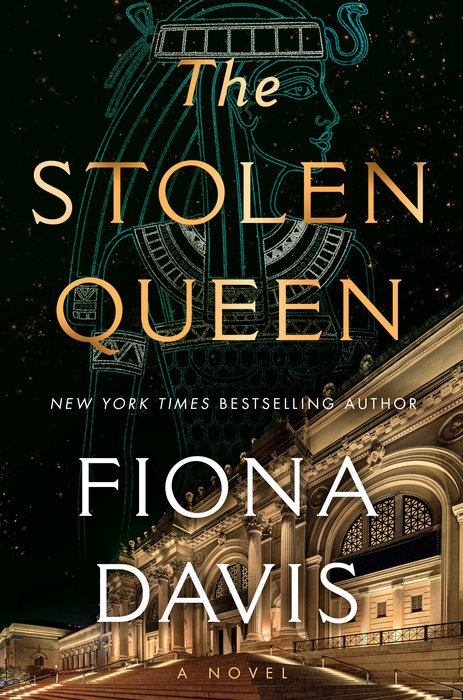
The Stolen Queen
By Fiona Davis
Genre: Historical Fiction / Mystery / Adventure / Historical Suspense
Publication Year: 2025
My Rating: ★★★★☆ (4/5)
The Past Has a Way of Resurfacing
Some artifacts belong in museums.
Others refuse to stay buried.
In The Stolen Queen, Fiona Davis blends archaeology, mystery, history, and personal redemption into a sweeping novel that spans continents and decades. Moving between the grandeur of ancient Egypt and the glittering social scene of 1970s New York, the novel explores the enduring power of the past and the ways unresolved grief can quietly shape a life.
At first glance, the story centers on a stolen antiquity.
A priceless Egyptian artifact disappears from the Metropolitan Museum of Art on the night of the famed Met Gala, setting off a search that stretches from Manhattan to the Valley of the Kings.
But beneath the theft lies a more compelling story.
This is a novel about unfinished grief.
About women whose ambitions are often underestimated.
And about the burden of carrying secrets for far too long.
Davis understands that history is never truly gone.
It simply waits for someone willing to uncover it.
Two Women Separated by Age, United by Purpose
The novel follows two compelling protagonists.
Charlotte Cross arrives in Egypt in 1936 as an eager anthropology student thrilled to participate in an archaeological dig. What begins as an extraordinary opportunity becomes a defining trauma that alters the course of her life.
More than forty years later, Charlotte lives quietly in New York as an associate curator in the Met's Department of Egyptian Art, determined to leave much of her past behind.
Then the artifact disappears.
Enter Annie Jenkins, an ambitious eighteen-year-old who unexpectedly finds herself working for the legendary Diana Vreeland as preparations are underway for the Met Gala. Annie's youthful enthusiasm and Charlotte's carefully guarded experience make for an unlikely but effective partnership.
One of the novel's greatest strengths is the relationship between these two women.
In lesser hands, Annie might have been merely a sidekick and Charlotte merely a mentor.
Instead, both emerge as fully realized individuals navigating their own uncertainties, ambitions, and fears.
The mystery propels the story.
The characters give it emotional weight.
A Public Health Perspective: Trauma Across the Lifespan
From a public health perspective, The Stolen Queen offers an intriguing portrayal of how traumatic experiences can reverberate over decades.
Modern public health research increasingly recognizes that adverse experiences can influence mental well-being far beyond the initial event. Trauma is not always visible. It may resurface through avoidance, anxiety, altered relationships, or a reluctance to revisit painful memories.
Charlotte embodies this reality.
The tragedy she experiences as a young woman in Egypt does not remain confined to the past. Instead, it quietly influences professional decisions, personal relationships, and her understanding of herself.
What I appreciated most was Davis's refusal to present healing as a single event.
Instead, healing unfolds gradually through confrontation, reflection, and renewed engagement with the experiences one has spent years avoiding.
The novel also highlights the importance of purpose and connection. Charlotte's partnership with Annie creates opportunities for trust, growth, and self-discovery that feel both believable and emotionally satisfying.
As someone with a public health background, I found this depiction refreshingly nuanced.
Looking Through an Analytic Lens
What impressed me most about The Stolen Queen is its examination of historical narratives and who gets to shape them.
Central to the story is Hathorkare, a female pharaoh largely dismissed by many scholars within the novel. Through Charlotte's research, Davis explores the broader theme of women whose achievements have been overlooked, minimized, or erased from historical memory.
This thematic thread elevates the novel beyond a conventional museum mystery.
The stolen artifact becomes symbolic of larger questions.
Who preserves history?
Whose stories survive?
Who decides which lives matter enough to remember?
The dual timeline structure works particularly well because each era illuminates the other. The archaeological discoveries of the 1930s complement the cultural spectacle of late-1970s New York, while the investigation itself unfolds at an engaging pace.
The mystery is cleverly constructed without becoming overly complicated.
Readers are given enough clues to remain invested while still allowing major revelations to retain their impact.
Reading This Novel as a Woman in Midlife
Some novels succeed because they transport readers to fascinating places.
Others succeed because they explore meaningful emotional terrain.
The Stolen Queen manages to do both.
As a woman in midlife, I found myself particularly drawn to Charlotte's story. There is something deeply relatable about a character who has spent years living around old wounds rather than fully confronting them.
Many people reach a point where they realize the past is still quietly shaping the present.
Charlotte's journey asks important questions.
How long can we avoid certain memories before they begin to define us?
What opportunities are lost when fear determines our choices?
And is it ever too late to reclaim parts of ourselves we abandoned long ago?
These questions resonated far more strongly than the mechanics of the mystery.
I was also captivated by the novel's celebration of intellectual curiosity. Charlotte's passion for Egyptology and Annie's eagerness to learn remind readers that discovery is not limited to youth.
The pursuit of knowledge remains transformative at any age.
Strengths and Limitations
The novel's greatest strength is its setting.
Davis vividly recreates both ancient Egypt and 1970s New York, immersing readers in two fascinating worlds without overwhelming the narrative with historical detail. The sections involving archaeology and Egyptian history are particularly compelling.
The characterization of Charlotte is another significant achievement. Her emotional journey feels layered and authentic, and her gradual willingness to revisit the past provides much of the novel's emotional resonance.
The mystery itself is engaging, balancing historical intrigue with enough suspense to maintain momentum throughout.
Some readers may find certain plot developments predictable, particularly if they are familiar with historical mysteries involving hidden artifacts and long-buried secrets. Additionally, the supernatural elements surrounding the supposed curse remain secondary to the historical investigation.
For me, however, the novel's atmosphere and character development more than compensated.
Final Thoughts
The Stolen Queen is an entertaining and richly atmospheric historical novel that skillfully combines archaeology, mystery, adventure, and emotional depth.
Fiona Davis has crafted a story that celebrates the enduring allure of ancient history while exploring the personal ways individuals carry their own pasts with them. Through Charlotte and Annie, she reminds readers that discovery often involves more than uncovering lost artifacts.
Sometimes it requires uncovering lost parts of ourselves.
Readers who enjoy museum mysteries, dual timelines, historical adventures, and strong female protagonists will find much to admire here. Book clubs, especially, will appreciate the novel's themes of memory, ambition, historical recognition, and personal growth.
What lingered with me after finishing was not the theft itself.
Nor even the mystery surrounding the artifact.
It was the idea that history is filled with voices waiting to be heard.
Some belong to forgotten queens.
Others belong to ordinary women whose stories deserve to be remembered just as much.
The Stolen Queen reminds us that recovering the past is not merely an intellectual exercise.
It is an act of recognition.
Rating: ★★★★☆ (4/5)


Comments
Post a Comment