
Isola
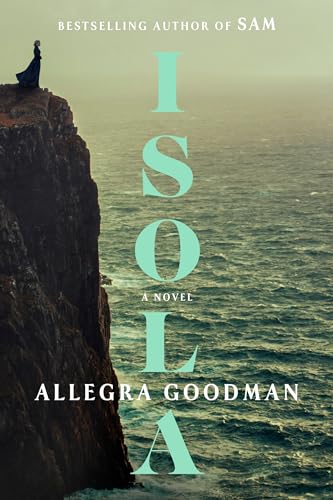
Isola
By Allegra Goodman
Genre: Historical Fiction / Literary Fiction / Survival Fiction
Publication Year: 2025
My Rating: ★★★★½ (4.5/5)
What Remains When Everything Is Taken Away?
Some novels tell stories of survival.
Others ask what survival costs.
In Isola, Allegra Goodman transforms a little-known sixteenth-century historical figure into the center of an intimate, deeply moving novel about endurance, faith, love, and self-discovery. Inspired by the real-life story of Marguerite de La Rocque, the book begins in privilege and security before stripping its heroine of nearly everything she possesses.
Her fortune.
Her status.
Her future.
Even her place in society.
What follows is not simply an adventure story, though it contains all the elements of one. It is a profound exploration of what remains when the structures that define a life suddenly disappear.
At its heart, Isola asks a question as old as literature itself:
Who are we when there is nothing left to rely upon except ourselves?
Goodman's answer is both devastating and beautiful.
A Heroine Forged by Isolation
The novel follows Marguerite, an heiress whose life changes dramatically after she is orphaned and placed under the guardianship of the volatile Jean-François Roberval. Stripped of both autonomy and financial security, she is compelled to accompany him on a dangerous voyage to New France.
Along the way, she falls in love.
The consequences are catastrophic.
When her relationship is discovered, Marguerite and her lover are abandoned on a remote island and left to face a brutal environment with little hope of rescue.
What makes the novel extraordinary is the gradual transformation of its protagonist.
At the outset, Marguerite's world revolves around privilege and expectation. She has little reason to question the assumptions that have shaped her life.
The island changes everything.
Removed from society, she is forced to confront nature, mortality, loneliness, and faith in ways she never previously imagined.
Goodman charts this transformation with remarkable restraint.
Marguerite's growth feels earned rather than dramatic.
Her resilience emerges slowly.
Page by page.
Season by season.
The survival story creates tension.
The inner journey gives the novel its power.
A Public Health Perspective: Survival Beyond the Physical
From a public health perspective, Isola offers a fascinating portrait of human adaptability under extreme conditions.
Modern research into resilience consistently demonstrates that survival is influenced by more than physical resources alone. Psychological flexibility, meaning-making, social connection, and belief systems often play critical roles in helping individuals endure hardship.
Marguerite's struggle reflects this reality.
Her challenges are certainly physical. Hunger, exposure, isolation, and uncertainty become daily realities. Yet the novel is equally interested in the emotional and spiritual dimensions of survival.
What sustains a person when circumstances become unbearable?
How do individuals preserve hope when no rescue appears imminent?
How does suffering reshape identity?
Goodman approaches these questions with sensitivity and nuance.
Rather than presenting resilience as innate heroism, she portrays it as something developed through necessity. Marguerite adapts because adaptation is the only option available to her.
As someone with a public health background, I appreciated the novel's recognition that endurance often emerges not from extraordinary strength but from the decision to continue despite fear, grief, and uncertainty.
Looking Through an Analytic Lens
One of the most impressive aspects of Isola is Goodman's command of historical immersion.
Many historical novels rely heavily on external events.
This novel focuses on interior experience.
The sixteenth century feels vividly present, not because of extensive exposition, but because Marguerite perceives the world through the beliefs, limitations, and assumptions of her era.
Faith, in particular, occupies a central role.
Modern readers may initially view Marguerite's spiritual reflections as products of historical convention. Yet as her isolation deepens, faith becomes one of the novel's most compelling themes.
Goodman treats religion neither skeptically nor sentimentally.
Instead, she examines how belief can provide structure, meaning, and comfort during periods of profound suffering.
The novel also demonstrates exceptional narrative discipline.
The prose remains elegant but controlled.
The emotional impact emerges gradually rather than through dramatic manipulation. This restraint allows pivotal moments to land with even greater force.
Readers are not pushed toward emotion.
They arrive there naturally.
Reading This Novel as a Woman in Midlife
Some books resonate because of their themes.
Others because of their characters.
Isola resonated with me because of its understanding of transformation.
As a woman in midlife, I found myself deeply moved by Marguerite's evolution from a young woman defined by external circumstances into someone who discovers an inner strength she never knew she possessed.
Many life transitions involve a version of this process.
Not necessarily on a deserted island.
But through loss, disappointment, illness, caregiving, aging, or unexpected change.
We often discover who we are only after life removes the identities we thought were permanent.
What happens when security disappears?
How do we rebuild ourselves after betrayal?
Can suffering become a source of wisdom rather than merely pain?
These are profoundly adult questions.
Marguerite's journey feels timeless because every generation confronts them in its own way.
Reading this novel, I frequently found myself pausing between chapters.
Not because of suspense.
Because I wanted time to reflect.
That is the hallmark of literary fiction at its finest.
Strengths and Limitations
The novel's greatest strength is its characterization.
Marguerite is rendered with extraordinary care, allowing readers to witness her evolution in all its complexity. Her growth feels authentic, making her story both emotionally compelling and psychologically convincing.
The prose is another notable achievement. Goodman writes with elegance and precision, creating a narrative voice that feels historically grounded while remaining highly accessible to contemporary readers.
The survival elements are immersive and often gripping, while the exploration of faith and identity adds substantial thematic depth.
Some readers may find the pacing quieter than that of traditional historical adventures. The novel prioritizes reflection, character development, and emotional transformation over action-driven storytelling.
For me, that restraint enhanced the experience.
The book's power comes not from dramatic events alone but from the meaning attached to them.
Final Thoughts
Isola is a beautifully crafted historical novel that combines survival, romance, faith, and psychological insight into a story of remarkable depth.
Allegra Goodman has transformed a fascinating historical episode into a meditation on endurance, identity, and the human capacity to adapt when confronted with unimaginable hardship. The result is a novel that feels both historically rich and emotionally universal.
Readers who enjoy literary historical fiction, character-driven narratives, and stories of resilience will find much to admire here. Book clubs, in particular, will discover abundant material for discussion in the novel's exploration of faith, love, power, and survival.
What lingered with me after finishing was not the island itself.
It was Marguerite.
The quiet determination.
The gradual awakening.
The realization that strength often emerges only when every alternative has been stripped away.
Isola reminds us that survival is about more than staying alive.
Sometimes it is about becoming the person we were meant to be when the world no longer tells us who we are.
Rating: ★★★★½ (4.5/5)


Comments
Post a Comment