
Propaganda Girls: The Secret War of the Women in the OSS
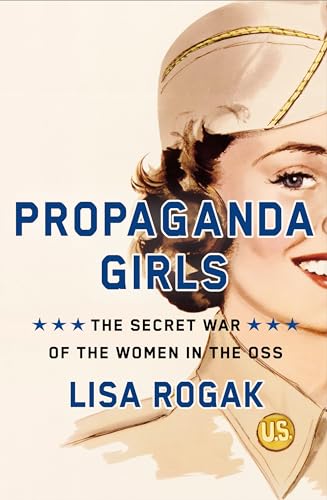
Propaganda Girls: The Secret War of the Women in
the OSS
By Lisa Rogak
Genre: History / Biography / World War II
Publication Year: 2025
My Rating: ★★★★☆ (4/5)
Spoiler Preference: Spoiler-Free
Winning Wars With Words Instead of Bullets
When most people think of World War II heroes, they imagine soldiers storming beaches, pilots flying dangerous missions, or resistance fighters sabotaging enemy operations. Far less attention is paid to the people who fought with typewriters, radio broadcasts, forged documents, rumors, and carefully crafted psychological warfare.
That is precisely what makes Propaganda Girls such an intriguing and worthwhile read.
Lisa Rogak tells the story of four remarkable women whose contributions to the Allied war effort occurred largely out of public view. Betty MacDonald, Zuzka Lauwers, Jane Smith-Hutton, and Marlene Dietrich operated in a shadowy realm where perception could be as important as firepower and where a well-timed rumor could sometimes accomplish what military force could not.
The result is a fast-moving account that combines biography, espionage, military history, and women's history into a highly accessible narrative. While the book occasionally sacrifices depth for momentum, it succeeds admirably in recovering a fascinating and often overlooked chapter of World War II.
Most importantly, it reminds readers that wars are fought not only on battlefields but also in minds.
The Hidden Front of Psychological Warfare
At the heart of Propaganda Girls is the work of the Office of Strategic Services (OSS), the precursor to the modern CIA. Rogak focuses on a specialized and highly secretive campaign aimed at undermining Axis morale through what was known as black propaganda: information intentionally disguised to appear as though it originated from enemy sources.
The women profiled in the book brought very different backgrounds to the effort.
Betty MacDonald was a journalist. Zuzka Lauwers possessed exceptional linguistic abilities and cultural knowledge. Jane Smith-Hutton contributed valuable international experience and organizational skill. Marlene Dietrich, already one of the world's most recognizable entertainers, used her celebrity and talents in service of the Allied cause.
Together, they helped create forged military communications, newspapers, radio programs, songs, and disinformation campaigns designed to sow confusion and doubt among enemy forces.
What makes the story compelling is that none of these women fit the conventional image of a wartime operative. Their greatest weapons were creativity, language, cultural awareness, and psychological insight.
Rogak's central argument is that these contributions mattered significantly to the Allied war effort and deserve greater historical recognition.
For the most part, she makes that case convincingly.
A Public Health Perspective: The Power of Information
Reading Propaganda Girls through a public health lens was unexpectedly enlightening.
Public health professionals understand that information shapes behavior. Whether the issue involves vaccination, disease prevention, emergency preparedness, or public trust, communication can influence outcomes on a massive scale.
The women in this book understood a similar principle.
Psychological warfare depends upon understanding how people process information, whom they trust, what they fear, and which messages are likely to alter behavior. The campaigns described in the book sought to weaken enemy morale by manipulating narratives and exploiting vulnerabilities within existing information networks.
Although the context could not be more different, the broader lesson remains relevant today.
Information is power.
The ability to shape public understanding can influence decisions, institutions, and even the course of major events. Reading about wartime propaganda in an era defined by social media, misinformation, and information warfare gave the book an unexpectedly contemporary resonance.
The story also highlights another public health principle: interventions often work best when they account for human psychology rather than relying solely on force or authority. Understanding how people think, believe, and act is frequently as important as understanding formal systems or structures.
Looking Through an Intelligence and Analytic Lens
From an intelligence perspective, Propaganda Girls is perhaps most valuable as a study of influence operations.
Modern intelligence professionals routinely examine how information can be leveraged to shape perceptions, influence decision-making, and create strategic advantages. The OSS campaigns described by Rogak illustrate early versions of these concepts in action.
What I appreciated most was the book's emphasis on complexity.
Successful propaganda is rarely effective because it is simply false. It succeeds when it incorporates elements of truth, exploits existing fears, and aligns with beliefs audiences are already predisposed to accept. The women profiled here demonstrated sophisticated understanding of these dynamics long before terms like "cognitive warfare" entered common usage.
The book also offers an interesting glimpse into organizational adaptation. During wartime, institutions often discover that unconventional talent can produce extraordinary results. These women operated in spaces where traditional assumptions about who could contribute and how began to break down.
The analytic challenge, however, is measuring impact.
Rogak occasionally implies direct connections between particular propaganda efforts and broader wartime outcomes. While these connections are plausible, readers should recognize the inherent difficulty in quantifying the precise effects of influence operations. Psychological campaigns operate within complex environments shaped by countless variables.
To her credit, Rogak generally focuses less on making sweeping claims and more on documenting the ingenuity and persistence of the individuals involved.
Reading This Book as a Woman in Midlife
One of the most rewarding aspects of Propaganda Girls is watching highly capable women succeed in environments that did not necessarily expect or encourage their success.
As a woman in midlife, I found myself appreciating not only the historical significance of these figures but also the practical competence they displayed. These were not symbolic participants in the war effort. They were professionals solving problems under extraordinary circumstances.
Their accomplishments serve as a useful reminder that history often overlooks the contributions of women not because those contributions were small, but because they occurred outside the traditional narratives that societies choose to celebrate.
I was particularly struck by the adaptability these women demonstrated. Faced with a global crisis, they applied existing skills in entirely new contexts. Journalism became intelligence work. Language expertise became strategic leverage. Performance and storytelling became tools of national defense.
There is something inspiring in that flexibility.
As we move through different stages of life, many of us discover that skills developed in one setting become unexpectedly valuable in another. Propaganda Girls illustrates that truth on a remarkable scale.
The book also reinforces a lesson I seem to encounter repeatedly in history: the most interesting stories often live just outside the spotlight.
Strengths and Limitations
The book's greatest strength is accessibility.
Rogak writes with the pace of a narrative historian rather than an academic scholar, making complex wartime operations understandable to general readers. The profiles are engaging, and the story moves quickly.
Another major strength is the recovery of overlooked history. By focusing on women who have received relatively little attention in traditional World War II narratives, Rogak broadens readers' understanding of the many forms wartime service can take.
The inclusion of Marlene Dietrich also provides an interesting bridge between celebrity culture and wartime sacrifice, illustrating how public figures sometimes leveraged their influence for purposes far beyond entertainment.
The primary limitation is depth. At just over two hundred pages, the book occasionally feels constrained by its format. Readers interested in extensive discussion of OSS operations, intelligence doctrine, or the broader history of psychological warfare may wish for more detail.
Similarly, balancing four biographies within a relatively short volume means certain figures receive less development than they arguably deserve.
These limitations are understandable and do little to diminish the book's overall effectiveness.
Final Thoughts
Propaganda Girls succeeds because it shines light on a forgotten corner of World War II history while telling an engaging human story.
Lisa Rogak introduces readers to four remarkable women whose creativity, intelligence, and determination contributed to one of the war's most unusual campaigns. In doing so, she expands our understanding of both the OSS and the many ways individuals can shape historical outcomes.
Readers interested in World War II, women's history, intelligence operations, espionage, and psychological warfare will find much to enjoy here. The book is particularly effective for readers who appreciate biographies that place individual lives within larger historical movements.
What lingered with me after finishing was not any single operation or tactical innovation.
It was the reminder that influence itself can be a battlefield.
Long before the digital age transformed the information landscape, these women understood that ideas, stories, and perceptions could alter events in ways that armies alone could not. Their weapons were words, their battleground was belief, and their contributions deserve far more recognition than history has traditionally given them.
Rating: ★★★★☆ (4/5)
Coffee Pairing: A wartime-strength black coffee, practical, sharp, and best enjoyed while contemplating how often history is shaped by people working far from the front lines.


Comments
Post a Comment